

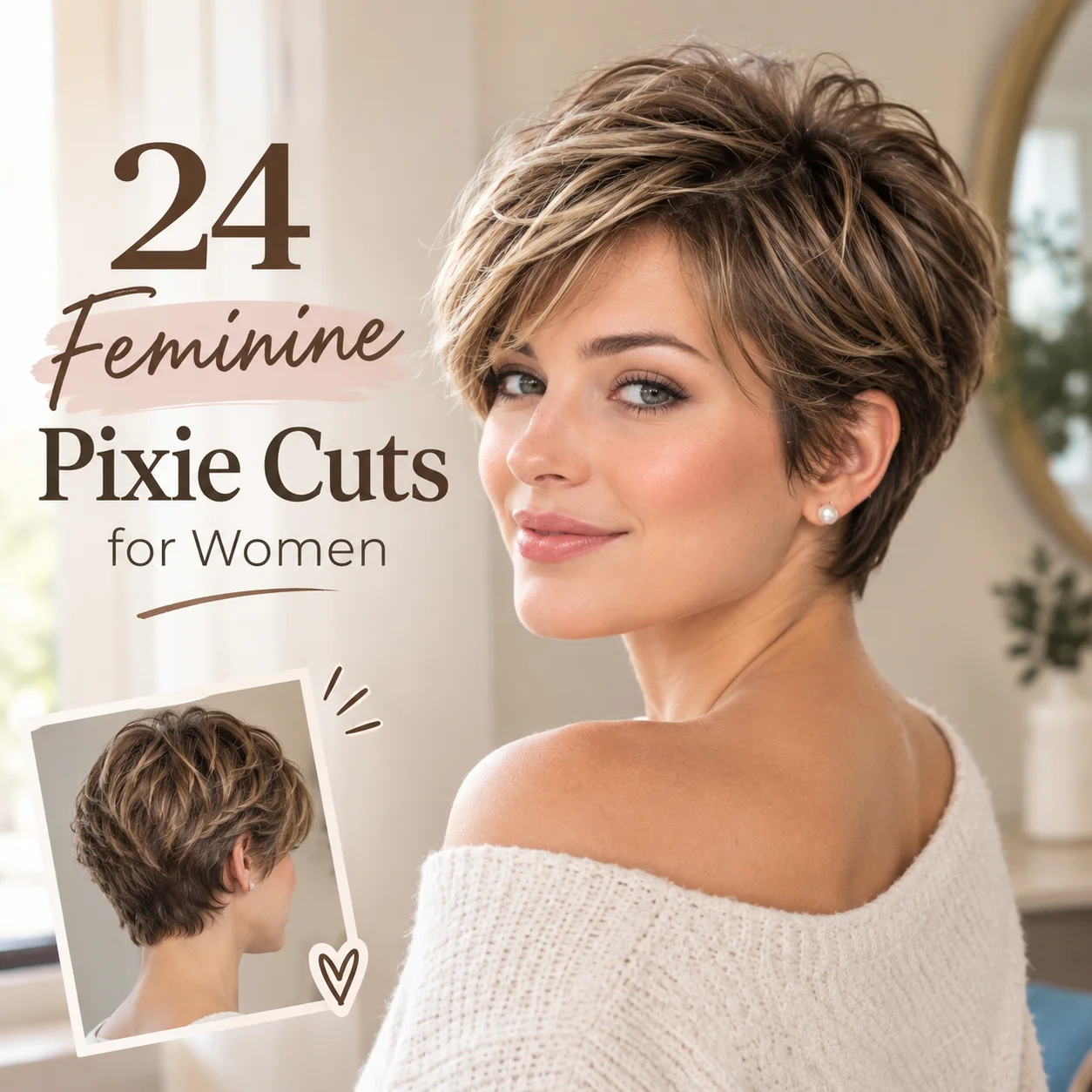
Feminine pixie cuts prove that short hair can be soft, polished and easy to style, never harsh or difficult. The secret is the right mix of length, layers, fringe and texture. A few longer pieces around the forehead, a softly tapered neckline or some movement through the crown can completely change how a short haircut looks.
If you are thinking about short haircuts for women, you have more options than a traditional crop. You can choose a longer silhouette that sweeps across the forehead, a textured cut for natural waves, or a curly pixie that celebrates your pattern. Some short hair styles look polished with almost no effort, while others have a relaxed, tousled finish.
In this guide you will find 24 feminine pixie cuts for women, with styling advice for every hair type and tips for explaining your favorite short hair ideas to a hairstylist. Whether you want a dramatic change or you are just exploring, these hairstyles for short hair will help you narrow down your direction.
What Makes a Pixie Cut Look Feminine?
Feminine short hair does not follow one shape. It can be sleek, softly layered, curly, wavy or deliberately textured. What matters is how the cut works with your features, your natural hair movement and your personal style.
Softness lives in the details. Wispy fringe frames the forehead, feathered layers stop the ends from looking blunt, and longer sections around the temples or ears give a short haircut a gentler outline. Even a closely cropped pixie looks elegant when its proportions suit you.
Before choosing a style, think about three things:
- Your natural texture: straight, wavy and curly hair behave differently when cut short, and a good pixie works with that pattern.
- Your preferred silhouette: close-cropped, fuller at the crown, long fringe, or a pixie bob with extra length.
- Your daily routine: some short hair cuts need only a little cream, others look best with a blow-dryer.
Save reference photos that show the front, side and back of the cut you want. It gives your stylist a much clearer picture.
25 Easy Shoulder-Length Curly Hairstyles
24 Feminine Pixie Cuts and Short Haircut Ideas Worth Saving
1. Soft Classic Pixie Cut
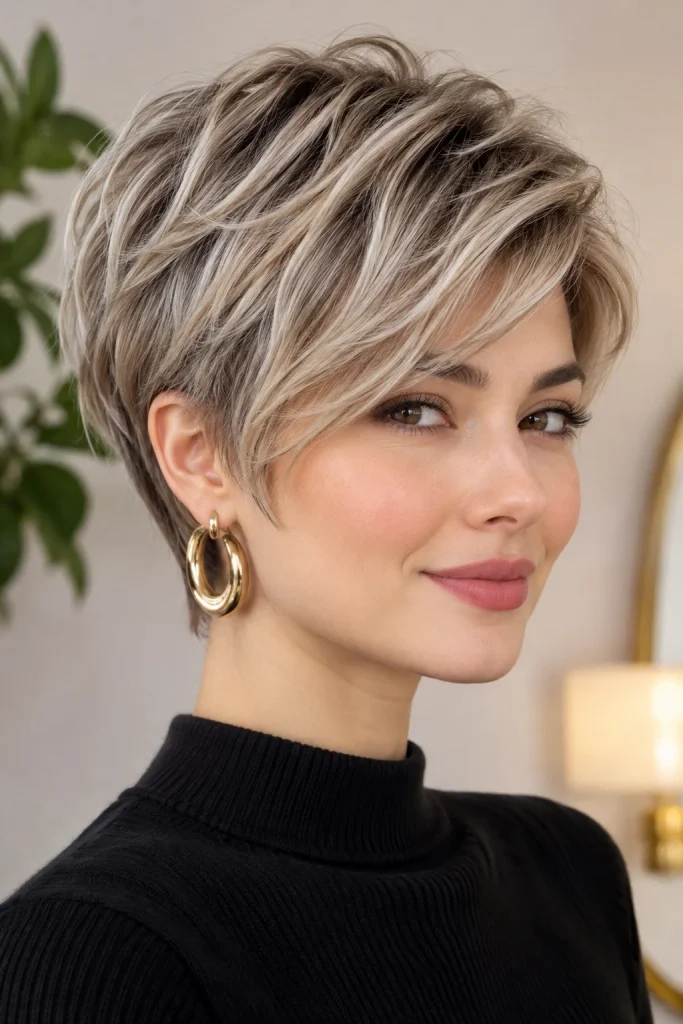
The soft classic pixie is a great starting point if you want short hair with a neat, natural finish. Slightly longer layers on top, softly blended sides and loose pieces around the temples keep the shape from looking too severe. It is easy to wear for everyday activities and can be dressed up with a quick blow-dry when you want extra polish.
Best face shape and hair texture: oval, heart and long faces; straight to slightly wavy hair of medium density.
At home, work a little lightweight cream through damp hair, guide the fringe with your fingers and let the layers settle. When you want extra polish, a small round brush and a quick pass of the dryer gives the crown a soft lift. Skip heavy wax, which weighs this cut down.
In the salon chair, ask for softly blended sides, a natural neckline and enough length on top to move. Point to the fringe length you like in your reference photo, because that one detail changes the whole mood. Ask how often it needs reshaping, usually every five to six weeks.
2. Feathered Feminine Pixie
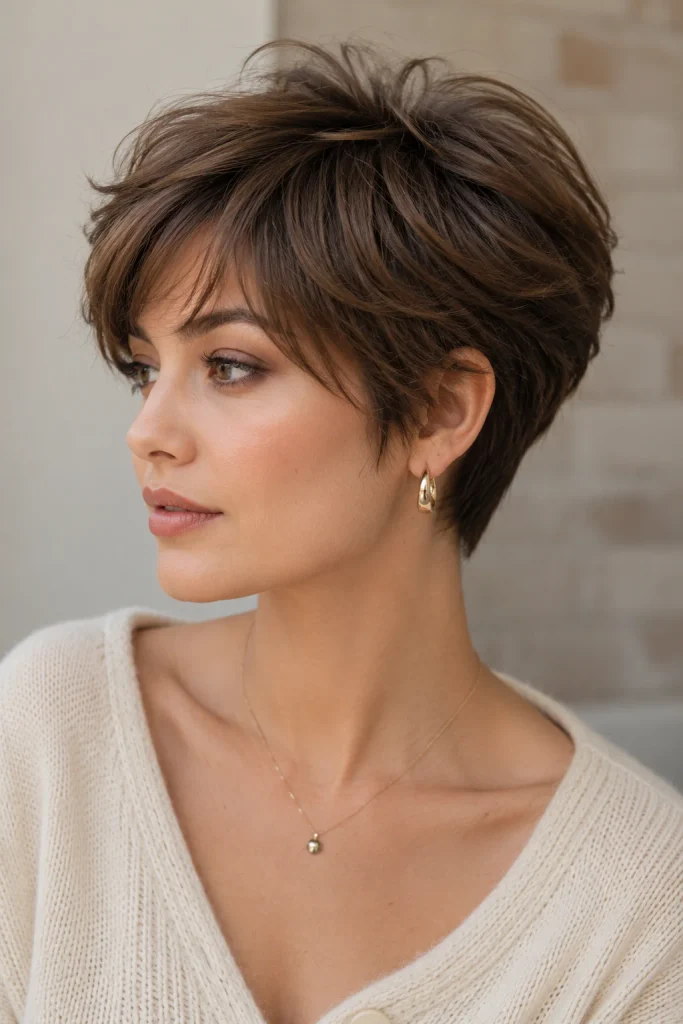
Feathered layers make this the most forgiving cut for anyone nervous about looking severe. It works best for women who want movement and softness, since the ends are shaped to flutter instead of sitting in a solid line. If a short cut ever felt flat on you, this is the one to try.
Best face shape and hair texture: round, square and heart faces; fine to medium straight or wavy hair.
Blow-dry the top with a small round brush, lifting at the roots and turning the ends slightly away from the face. Finish with a pea-sized amount of light cream. A heavy wax clumps feathered ends together and makes them look greasy.
Ask for feathered ends that suit your hair density, and say clearly that you do not want the whole cut thinned out. Fine hair needs fewer, softer layers than thick hair, so ask your stylist to explain where they plan to remove weight.
3. Side-Swept Pixie with Long Bangs
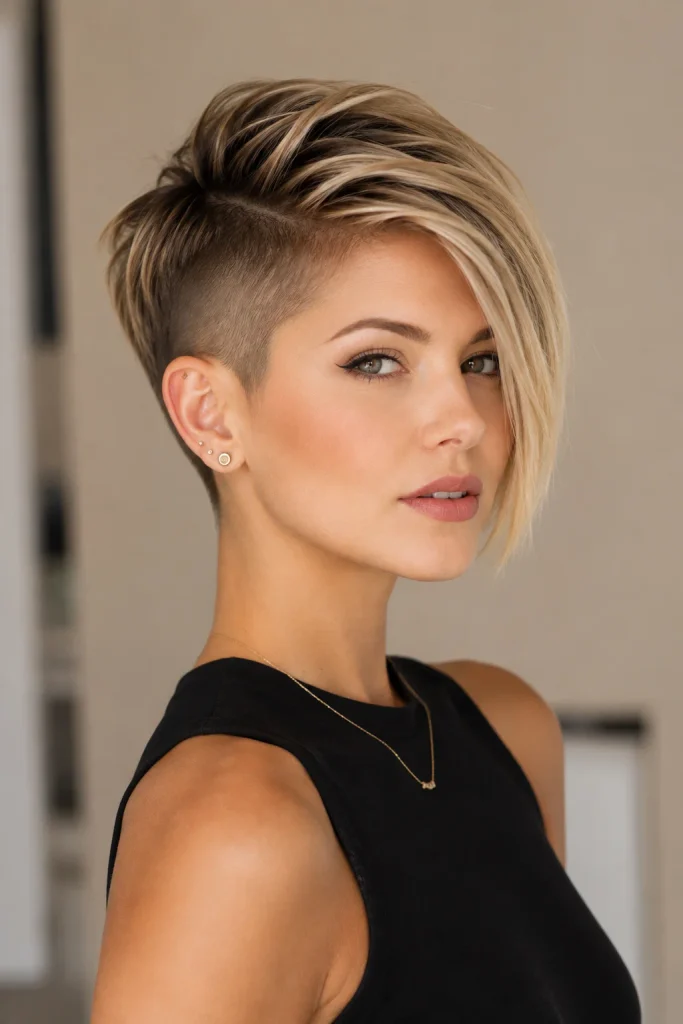
A side-swept pixie features a longer fringe that crosses the forehead and blends into the top layers. The angled shape adds movement and gives you more styling options than a short, straight fringe. You can wear it smooth for a neat finish or separate the strands for a relaxed look. Before choosing this cut, consider your natural part and hairline, as both affect how easily the fringe stays in place.
Best face shape and hair texture: round, square and heart faces; straight or slightly wavy hair with a natural side part.
Dry the fringe toward your preferred side with a small brush, then switch to cool air to set the direction. A little flexible product keeps the sweep moving instead of stiff. If your hair fights your part, dry it against the grain first, then sweep it back.
Request longer side-swept bangs that blend into the top layers instead of ending in a disconnected section. Ask your stylist to check the natural growth direction at your hairline before cutting, since a cowlick can ruin the sweep.
4. Pixie Cut with Wispy Bangs
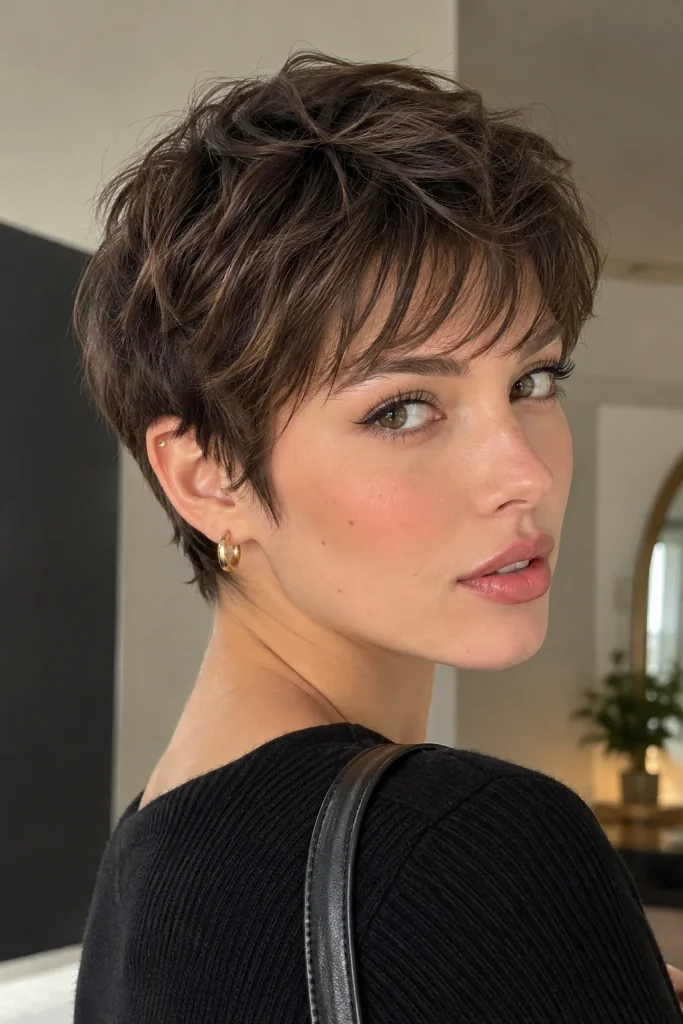
Wispy bangs feature fine, lightly textured strands rather than a solid, blunt fringe. They work well if you want to frame your forehead without committing to a heavy bang. The length can sit just above the eyebrows or extend toward the temples, depending on your preference. If this is your first time trying bangs, a slightly longer version gives you more flexibility as you get used to the look.
Best face shape and hair texture: oval, long and heart faces; fine or straight hair that separates easily.
Arrange the bangs with your fingertips and a tiny amount of product, then leave them alone. Too much wax makes fine strands look stiff and separated. If they get oily by midday, a small puff of dry shampoo at the hairline brings them back.
Ask for light, textured bangs that blend into the front layers, and tell your stylist how short you can live with. Wisps just above the brow feel playful, while slightly longer ones can be swept aside. A trim every four weeks keeps them neat.
5. Pixie Cut with Curtain Bangs
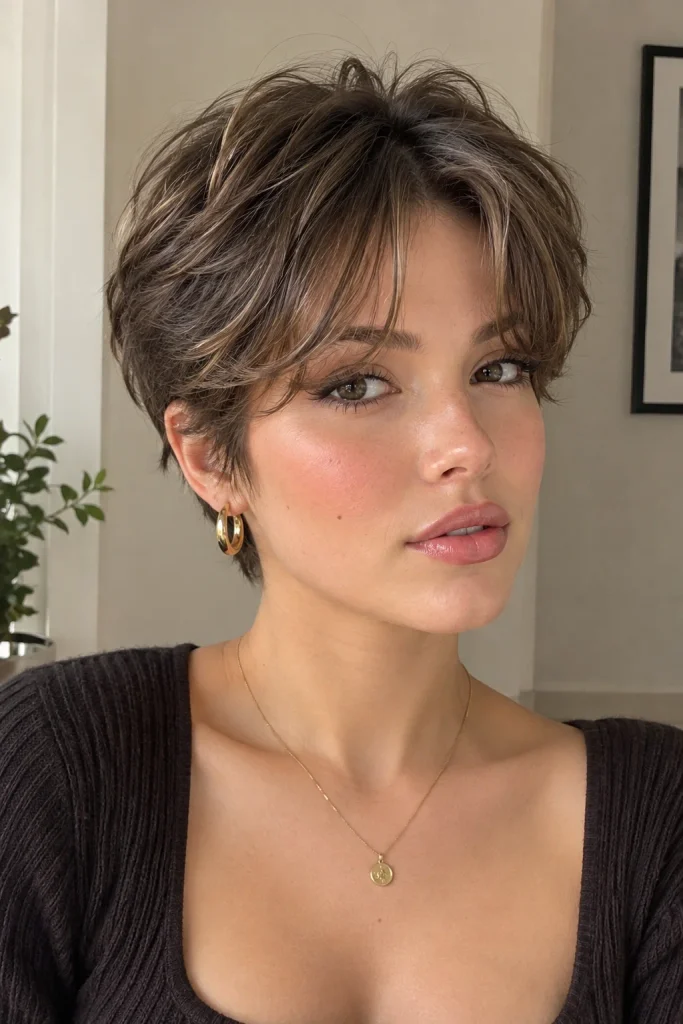
Curtain bangs part near the middle and sweep toward either side of the face. On a pixie cut, they create a softer outline while leaving enough length at the front for different styling options. They can be worn with a natural center part, brushed slightly to one side or tucked behind the ears as they grow. This style works best when the fringe length is tailored to your hair’s natural movement.
Best face shape and hair texture: round, square and long faces; straight to wavy hair of medium density.
Blow-dry the bangs forward first to remove any wave, then use a round brush to sweep them away from the center part. A light spray at the roots helps them hold their shape through the day, and on lazy mornings they simply tuck behind the ears.
Ask for slightly longer curtain bangs that can tuck behind the ears, and say whether you want a true center part. Your stylist should check them once dry, because bangs shift a lot as the hair dries.
6. Long Feminine Pixie Cut
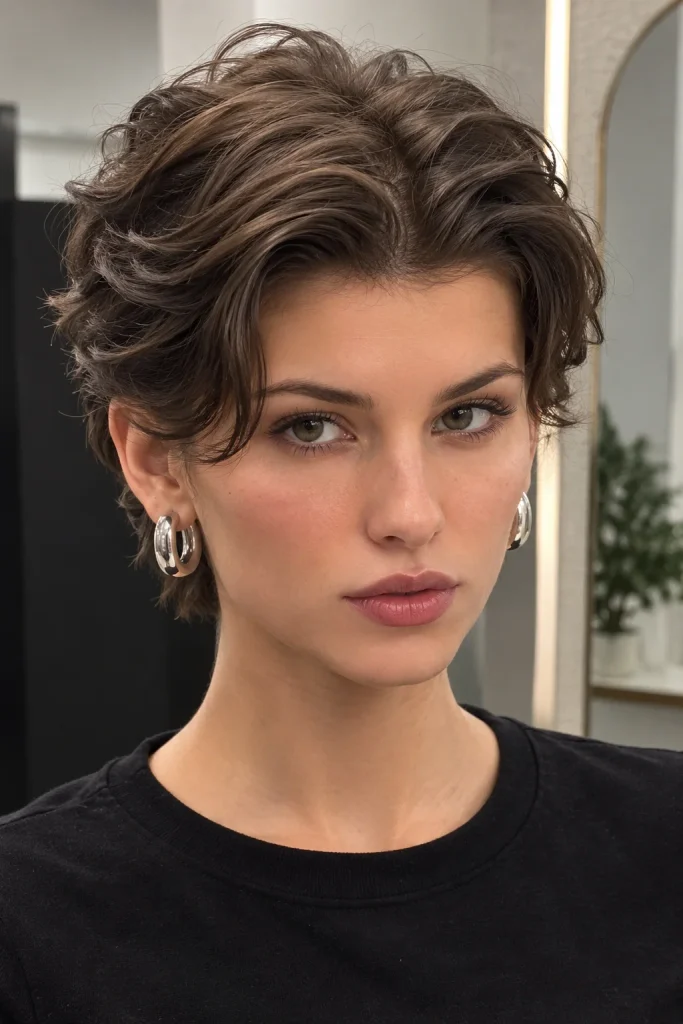
A long pixie keeps extra length through the crown and front, making it a practical option if you are not ready for a closely cropped haircut. The longer sections can be swept across the forehead, parted to either side or tousled for added texture. You can also tuck one side behind your ear for a different finish. Keep in mind that the neckline and sides still need occasional trims to maintain the intended shape.
Best face shape and hair texture: works on most face shapes, especially round and oval; any texture with enough length on top.
Try a deep side part for polish, or work a little texture cream through the top and tuck one side behind the ear. A small pin holds the front off your face on gym days. Keep the nape tidy, since that is where regrowth shows first.
Ask for a longer front and crown with a blended outline that does not feel too cropped around the face. It helps to mention how long you want to go next, so your stylist can plan the shape for the in-between stages.
7. Dainty Micro-Fringe Pixie
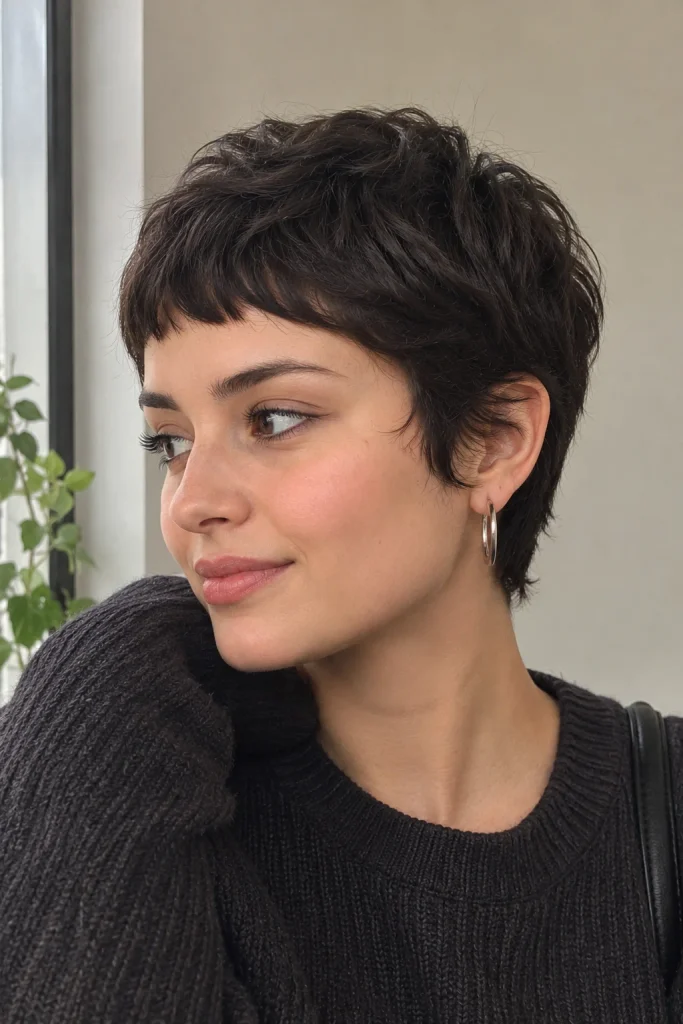
A micro-fringe pixie features very short bangs that sit above the eyebrows, drawing attention to the eyes and brows. It creates a bold, fashion-forward look and works particularly well with straight hair that holds its shape. Because the fringe is so short, it needs regular trims and may take time to grow out if you change your mind.
Best face shape and hair texture: oval and heart faces with a higher forehead; straight fine-to-medium hair.
Separate a few strands with your fingertips and skip heavy wax, which flattens such a short fringe. A drop of lightweight serum adds shine without weight. Keep the scissors away at home, since a DIY trim on a micro-fringe goes wrong very fast.
Be exact about where the fringe should sit, whether just above the brows or slightly higher. Ask how to grow it out later, because a micro-fringe passes through an awkward stage. Plan a quick fringe trim every three to four weeks.
8. Shaggy Pixie Cut
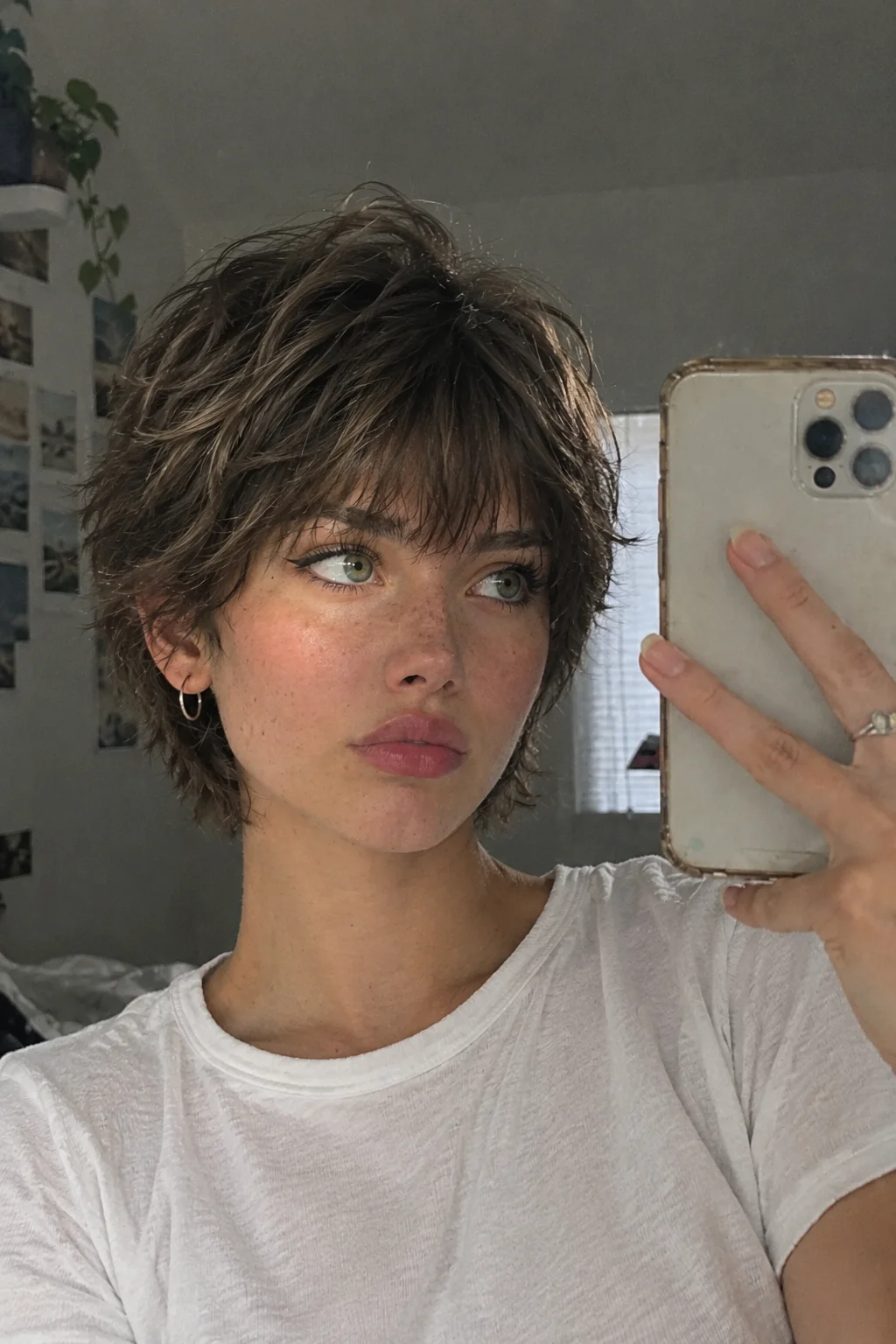
The shaggy pixie is made for women who like a little imperfection. Uneven layers create movement and a relaxed finish that photographs beautifully and looks even better in real life. It is a great choice if your hair has some natural wave, since the cut works with that texture instead of fighting it.
Best face shape and hair texture: oval, square and long faces; wavy or lightly textured medium-to-thick hair.
Scrunch a little texture cream through the ends, then tousle the top with your fingers and let it air-dry. Too much product makes short layers clump, so build slowly. Sea-salt spray on dry hair revives the shape on day two.
Ask for controlled texture and a fringe that works with your growth pattern. Explain that you want relaxed rather than choppy, and ask your stylist to cut the layers so they fall naturally instead of sticking out.
9. Textured Crop Pixie
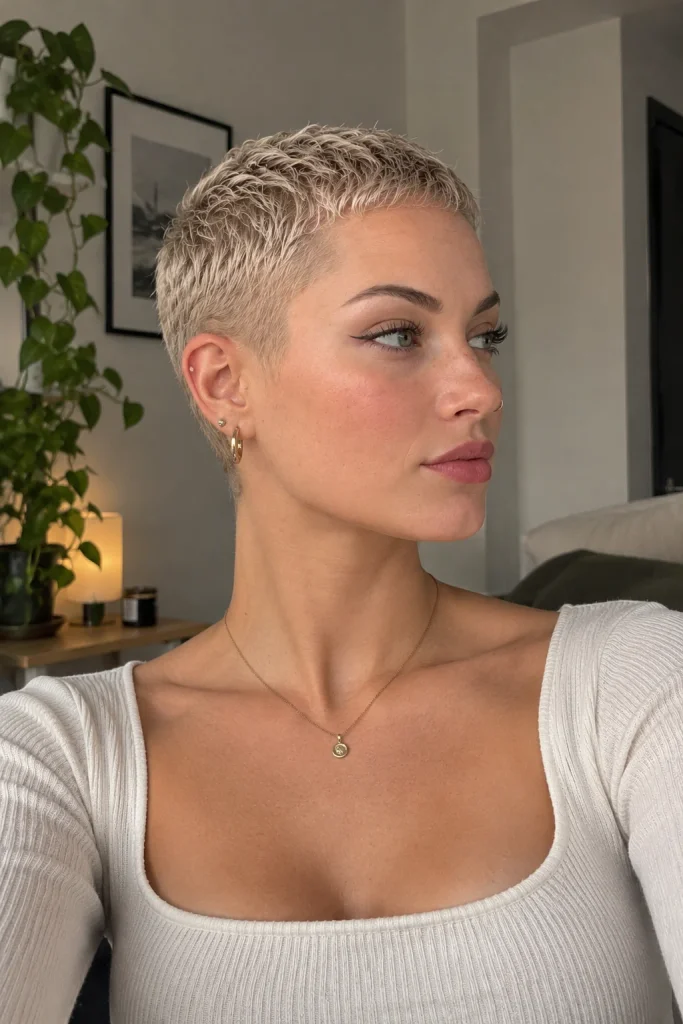
This is the pixie for women who want a modern edge without going punk. Small sections on top create visible texture while the sides stay clean, so the cut looks intentional rather than messy. Medium-to-thick hair holds the separation best.
Best face shape and hair texture: oval and square faces; medium-to-thick straight hair.
Warm a small amount of flexible paste between your fingers and define a few sections, leaving the rest soft. Rake it forward and up rather than flat. Wash paste out regularly, since buildup dulls short hair quickly.
Ask for a short textured crop with a natural finish, and say plainly that you do not want exaggerated spikes. Mention how short you want the sides, and ask your stylist to show you how much paste to use.
25+ Halloween Hair Color Ideas: Spooky & Creative Looks
10. Asymmetrical Pixie Cut
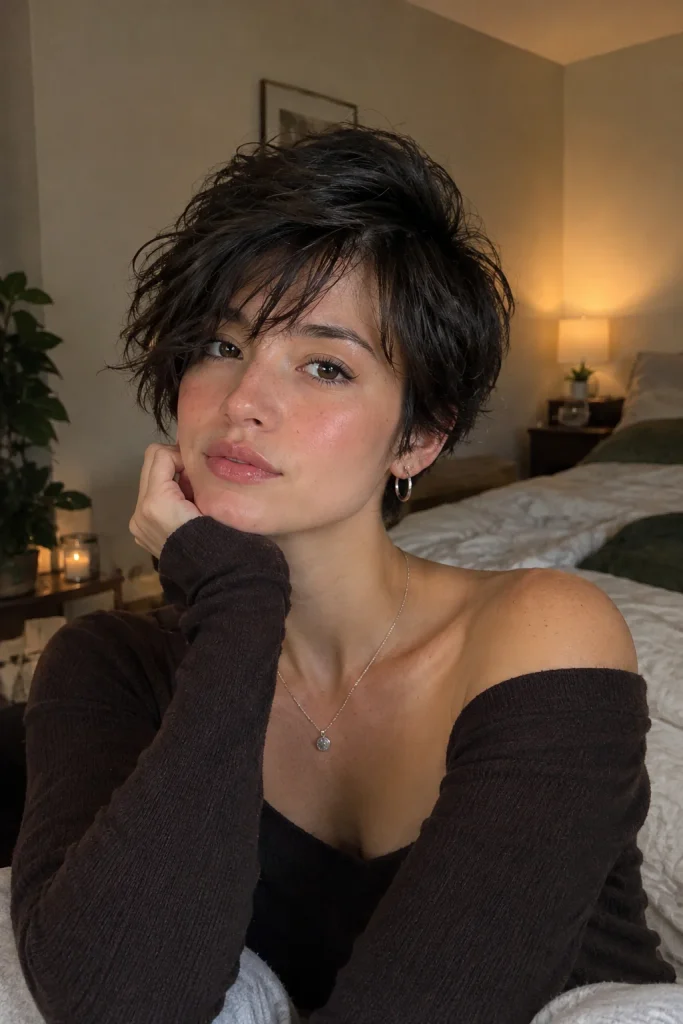
Asymmetry is the easiest way to make a pixie feel personal. One side carries a longer fringe or more coverage while the other stays cropped, creating contrast without bright color or elaborate styling. You decide how bold it gets: subtle for everyday wear, stronger if you like to stand out.
Best face shape and hair texture: round and square faces; straight or lightly wavy hair with a defined part.
Keep the longer side smooth or softly swept, with a little texture at the ends so it never looks heavy. Flip your part now and then to change the mood. A smoothing balm helps if the longer side picks up frizz.
Explain how noticeable the difference in length should be, and ask to see the shape from both sides in the mirror before the final trim. Mention which way your hair naturally parts so the longer side sits where it already falls.
11. Tapered Pixie with a Long Wispy Nape
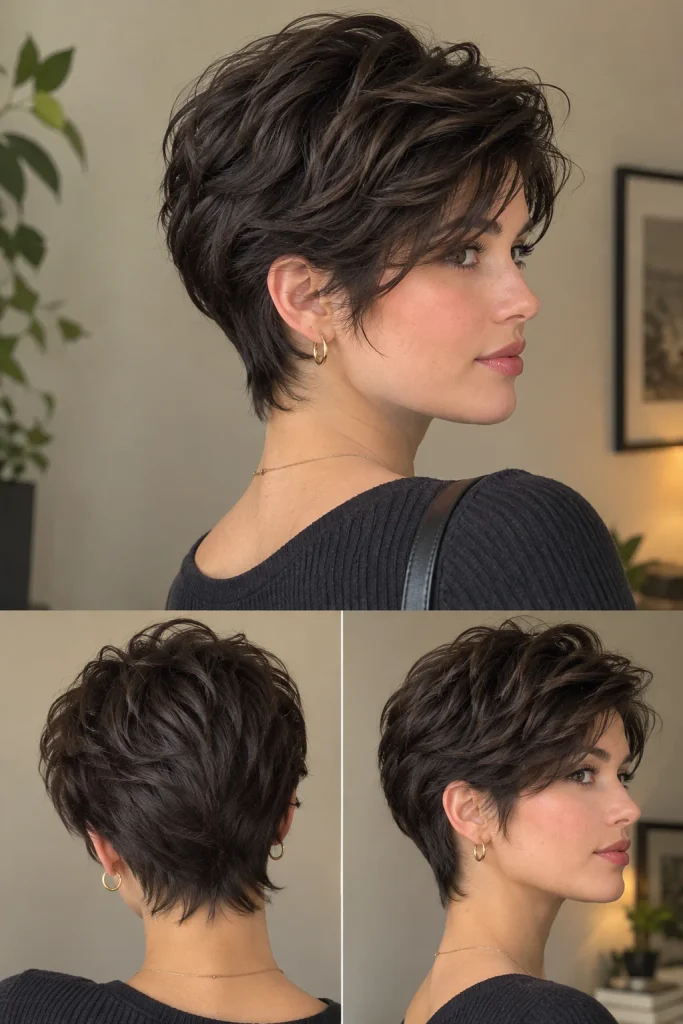
A tapered pixie gradually shortens around the ears and neckline while leaving more length on top. This version keeps the nape slightly longer and wispy, creating a softer transition at the back. It is worth considering if you want a tidy outline without a very close crop at the neckline. The extra length can also make the transition toward a short bob easier as your hair grows.
Best face shape and hair texture: oval, heart and long faces; fine to medium straight hair.
Smooth the sides with your hands and put a light cream on the top layers. A flat brush helps lay the nape down, and a little texture at the crown adds shape. This cut needs very little product to keep its outline.
Ask for a gradual taper and say exactly how short the neckline and ear area should be. Request a little length at the nape, blended so it does not look like a separate section.
12. Pixie Cut with a Soft Undercut
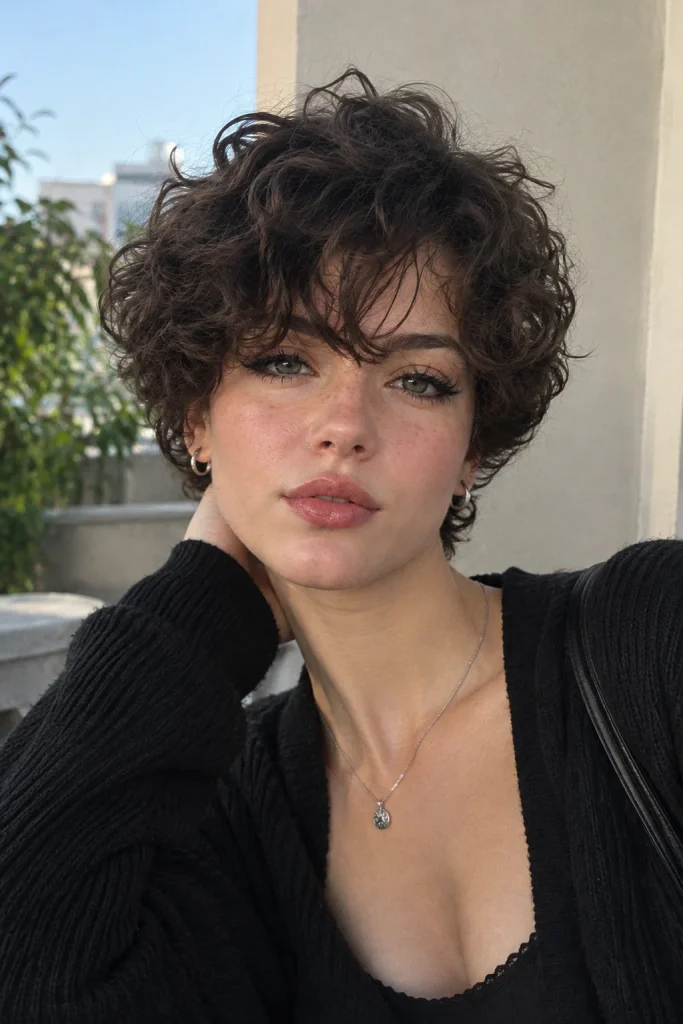
A soft undercut keeps the hair shorter beneath the longer top layers, reducing bulk around the sides and back. The contrast can be subtle or more noticeable, depending on how much of the shorter section you choose to reveal. It is particularly useful for thick hair that tends to puff out around the ears. Before booking the cut, discuss the undercut’s height and how you want it to look as it grows out.
Best face shape and hair texture: oval and square faces; thick or dense hair that needs bulk removed.
Sweep the top over the shorter section for a softer finish, or lift it with your fingers to show the undercut on days you want attitude. A light texture spray adds grip. Keep the cropped part tidy with a visit every few weeks.
Decide how high and how close the undercut should be, and ask how it will look while growing out. Show your stylist where your part naturally falls so the undercut sits on the right side.
13. Voluminous Crown Pixie
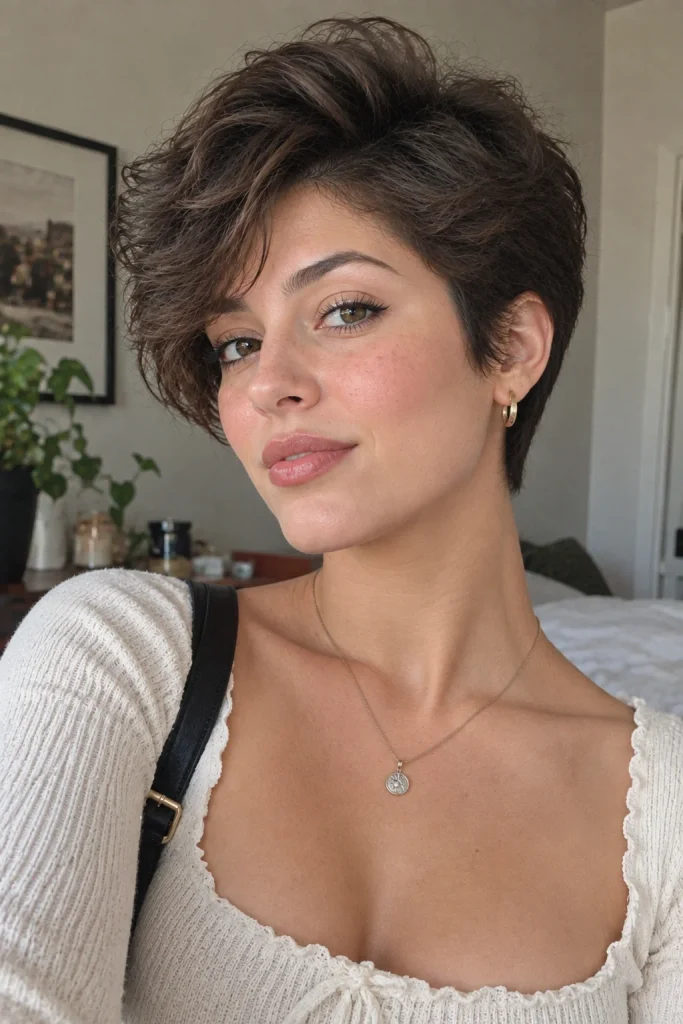
This pixie puts the emphasis on the crown, so the top gets height and movement while the sides stay close. It makes short hair look fuller without stiff styling, which helps if your hair tends to fall flat. The lift also adds a little vertical length to a rounder face.
Best face shape and hair texture: round and square faces; fine to medium hair that tends to lie flat.
Apply lightweight mousse at the roots and lift while blow-drying with your fingers. Finish with flexible hold, not hard spray, so the crown stays soft. Drying upside down for the last minute gives easy volume.
Ask for soft crown volume with blended sides and no daily teasing. Mention your hair density, because fine hair needs root-lifting help while thick hair needs shaping so the top does not puff out.
14. Curly Feminine Pixie Cut
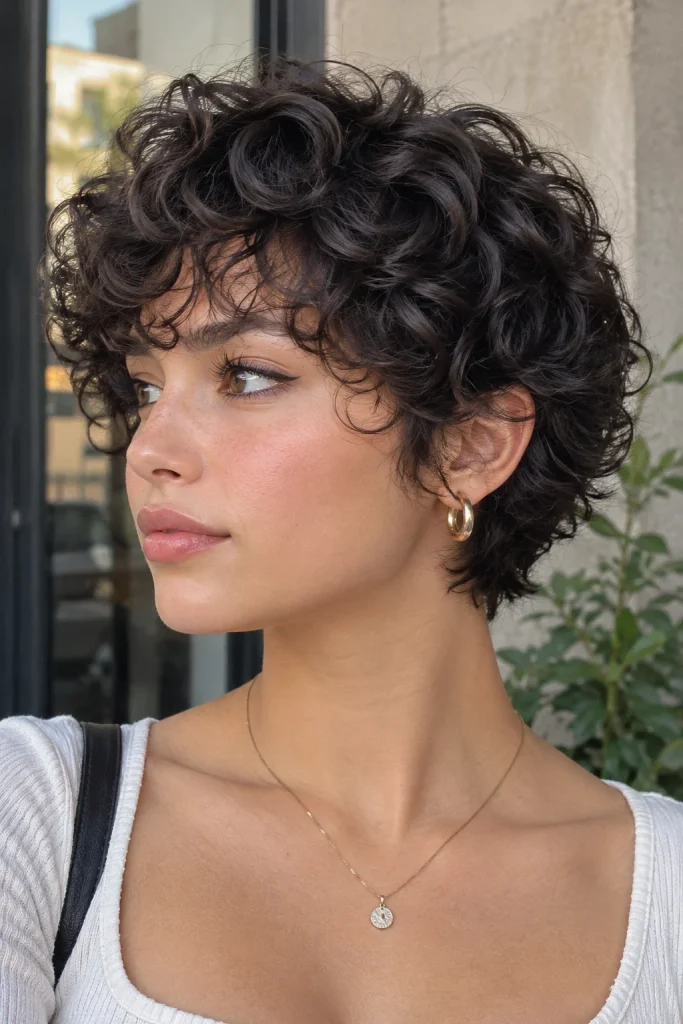
A curly pixie celebrates your texture instead of fighting it. The curls create their own volume, so even a short cut looks full and expressive. It also removes the weight and tangles of long curls, which makes mornings far easier.
Best face shape and hair texture: oval, round and heart faces; 3A to 4A curls and coils.
Apply curl cream to damp hair, scrunch gently and air-dry or diffuse on low. Resist touching the curls while they dry, since that is what causes frizz. Refresh day-two curls with a light spritz of water and a little gel.
Choose a stylist experienced with your curl pattern and ask how the cut will look both wet and dry. Curly hair springs up and looks much shorter once dry, so ask for the length to be checked dry.
15. Wavy Pixie Cut
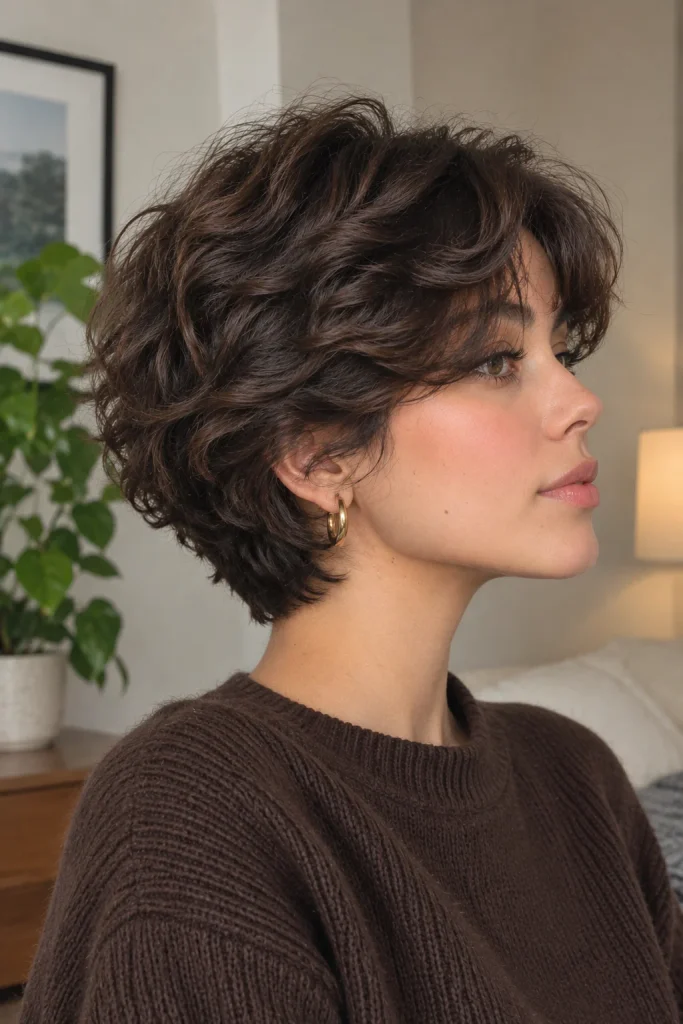
A wavy pixie uses the bends already in your hair. Instead of smoothing everything flat, the cut leaves enough length for waves to form around the crown, which gives a soft, lived-in look with very little effort. It is ideal if you usually wear your hair air-dried.
Best face shape and hair texture: oval, round and heart faces; 2A to 2C waves.
Scrunch lightweight mousse into damp hair, air-dry when you can and separate a few pieces with your fingertips. Humidity changes how waves sit, so keep an anti-frizz serum handy. A diffuser speeds things up on busy mornings.
Ask for a shape that encourages your waves and does not need daily heat. Tell your stylist how your hair behaves on a normal day, not only after a salon blow-dry, so the layers are cut for your real texture.
16. Pixie Cut for Thick Hair
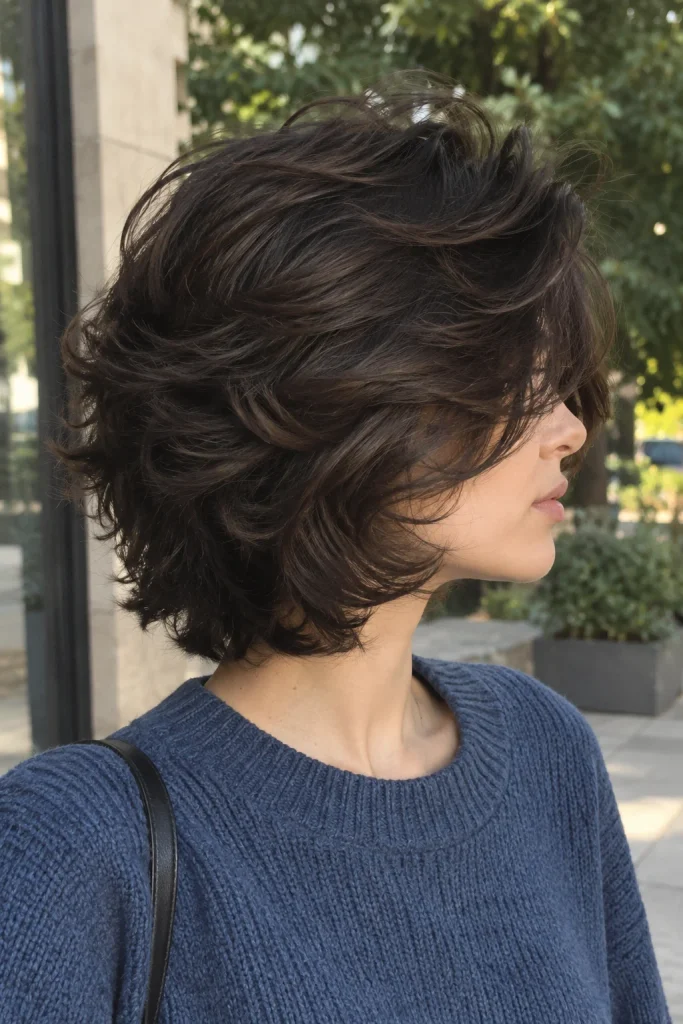
Thick hair makes a beautiful, substantial pixie, but its density needs careful handling. Without shaping, the sides get bulky and the crown sits heavy. With the right layers, the same hair looks sculpted and full instead of puffy.
Best face shape and hair texture: oval, round and square faces; thick or coarse hair, straight, wavy or curly.
A light smoothing cream calms puffy sides, and a little texture product defines the top. Blow-dry in sections so the hair dries flat instead of expanding. A weekly deep conditioner keeps thick strands soft and easy to shape.
Ask for targeted weight removal in the areas that feel bulky, while keeping the overall shape. Point out where your hair puffs out, and request internal layering instead of obvious thinning.
30+ Long Hair Color Ideas That Look Gorgeous in Every Season
17. Pixie Cut for Fine Hair
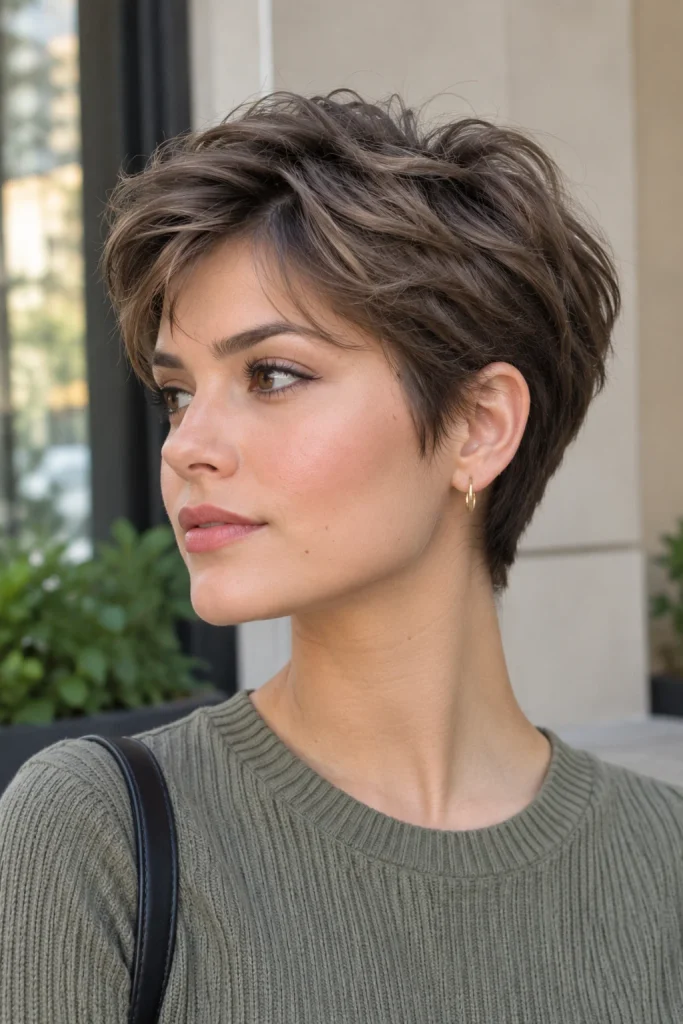
Fine hair often thrives as a pixie because a shorter length removes the weight dragging the strands down. A balanced outline and carefully placed layers make it look fuller. The catch is that more layers do not mean more volume, since too much texturizing leaves fine ends see-through.
Best face shape and hair texture: oval, round and heart faces; fine, thin, straight hair.
Use a lightweight volumizer near the roots and lift the crown while drying. Avoid heavy oils and creams, which flatten fine hair within hours. Dry shampoo at the roots on day two restores body.
Ask for a pixie that keeps density where your hair looks thinnest, with soft layers instead of heavy thinning. Ask whether a slightly longer top would look fuller on you.
18. Pixie Bob with Soft Layers
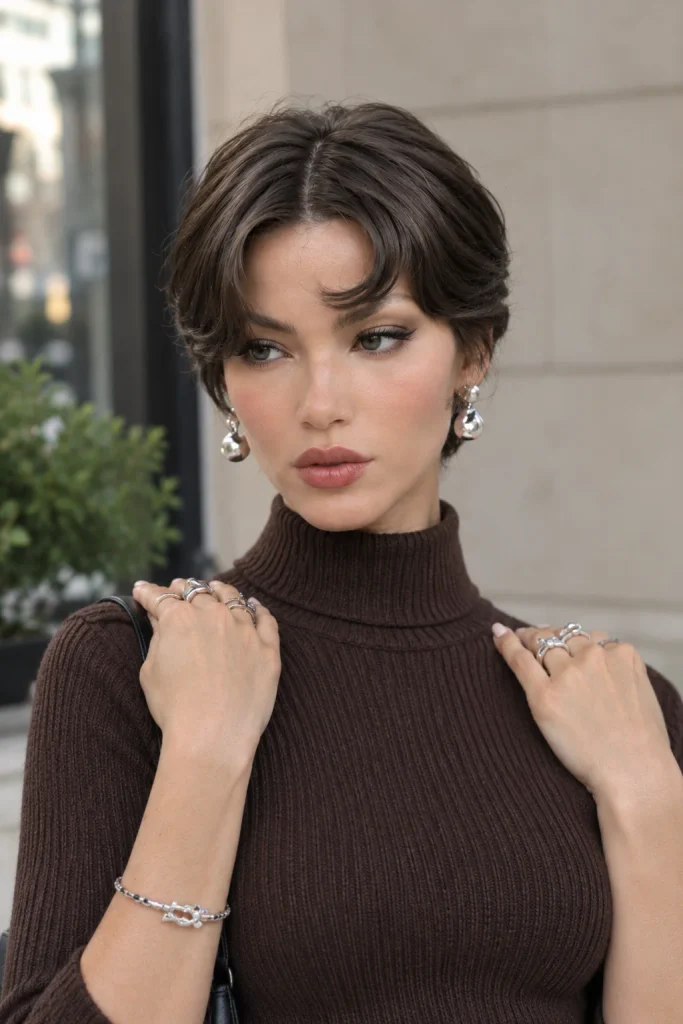
A pixie bob, or bixie, sits between a pixie and a short bob. It keeps more length around the sides, ears and nape, so the outline feels fuller and less exposed. It is the best choice if you love short hair but are not ready to feel bare at the neck.
Best face shape and hair texture: round, oval and heart faces (the extra length softens the jaw); straight or wavy medium hair.
Let the longer pieces fall naturally, or add a subtle bend with heat protectant and a low-heat tool. A little texture spray keeps the layers from looking flat. The extra length also lets you tuck one side behind the ear for a quick change.
Say how much coverage you want around the ears and nape, because that detail separates a bixie from a pixie. Bring a photo showing the back, and ask for soft layers so it grows into a bob without a messy stage.
19. Straight and Sleek Pixie
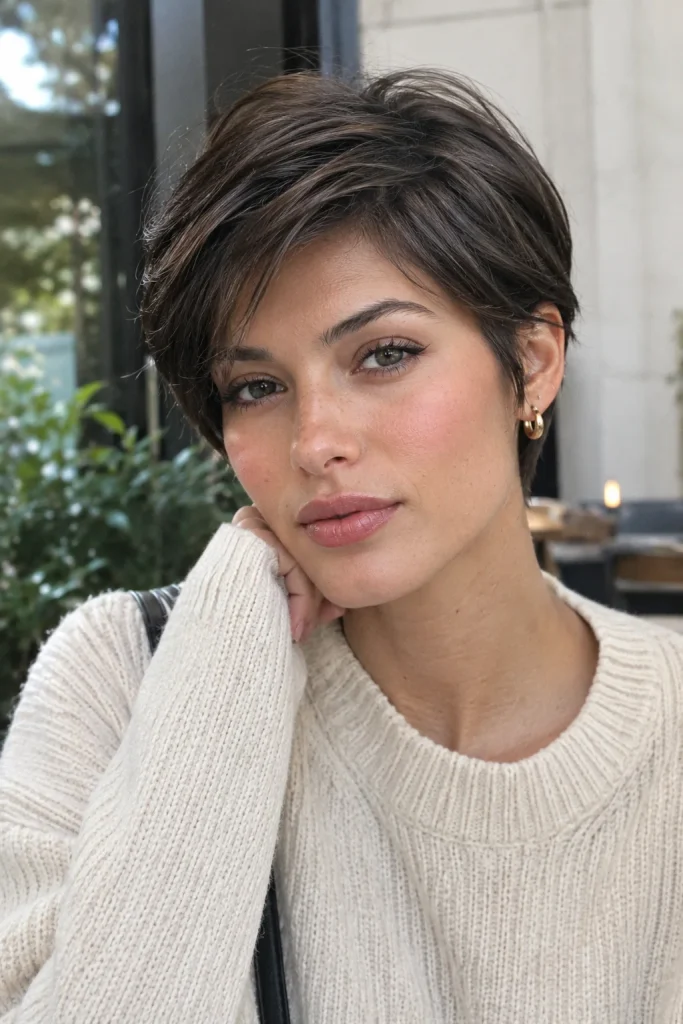
Among short straight hairstyles, this is the most polished. The hair lies close to the head with a neat part and smooth strands, so the outline becomes the star instead of texture. It suits women who prefer a refined, minimalist look to a tousled one.
Best face shape and hair texture: oval and heart faces; straight, smooth, medium-density hair.
Use heat protectant, smooth the hair into place with a small brush and finish with a tiny bit of smoothing product. It looks best when the cut follows your natural hair direction, so you rarely need high heat. A shine serum on the ends adds a glossy finish.
Ask for a clean silhouette with soft edges, not razor-sharp ones. Check whether your natural texture supports a sleek finish, and ask what you will need to do at home so there are no surprises.
20. Blonde Pixie with Money-Piece Highlights
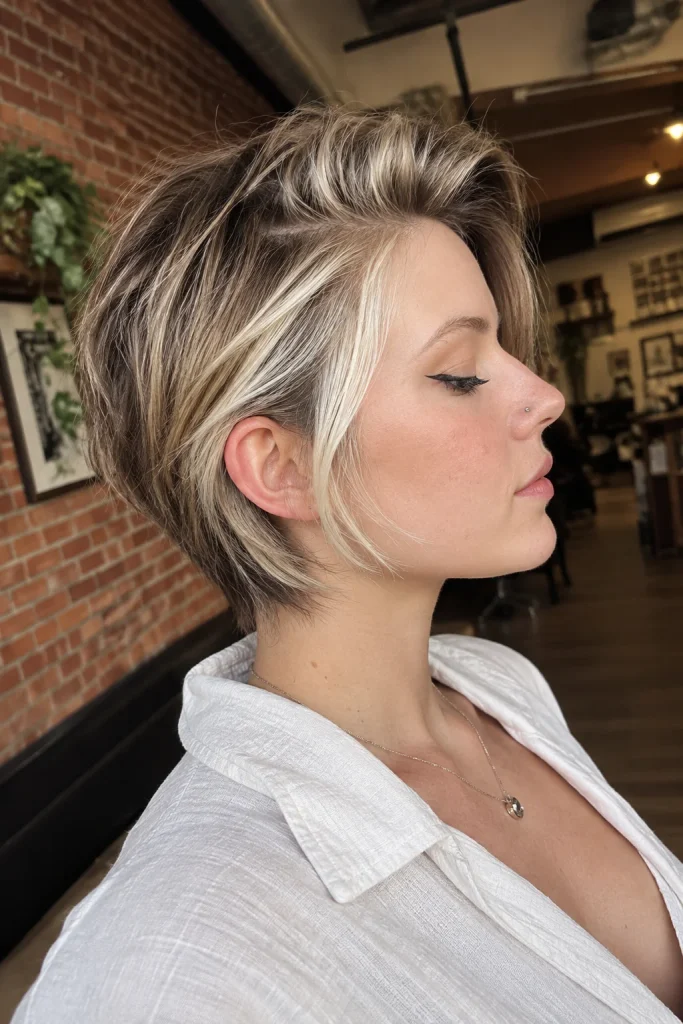
Blonde color makes the layers and contours of a pixie more visible. Money-piece highlights sit only on the front strands, so they cost less and need fewer touch-ups than a full head of blonde. Color is optional, since the shape alone looks feminine, but this one adds a bright frame around the face.
Best face shape and hair texture: oval, round and heart faces; light to medium brown hair that lifts well.
Keep the layers soft and use color-safe products. A purple shampoo once a week fights brassiness, and a deep conditioner keeps lightened hair from feeling brittle. Go gentle with heat tools to protect the highlights.
Discuss shade and upkeep before coloring: a creamy tone suits golden undertones and an ash tone suits cool ones. Ask how the roots will look as they grow in, and how often you will need a toner.
21. Auburn or Copper Pixie
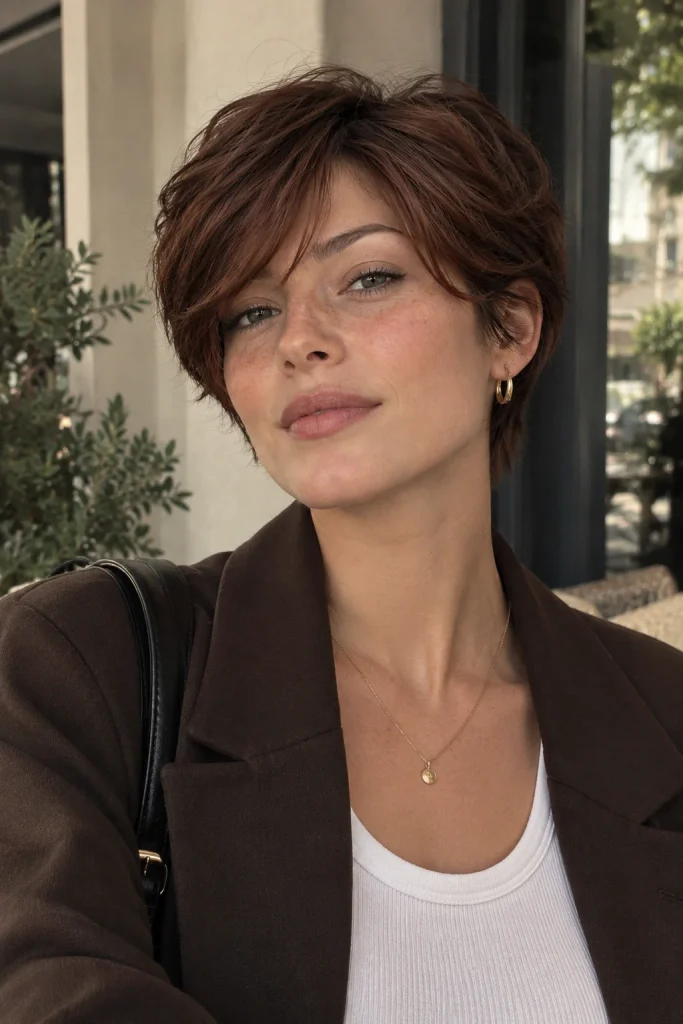
Copper and auburn look rich on short hair because every layer catches the light. They add warmth and dimension without going blonde, and they make a textured pixie look multi-tonal. They suit most skin tones once the shade is chosen carefully.
Best face shape and hair texture: all face shapes; warm or neutral skin tones, straight or wavy hair.
Use color-safe shampoo and cool water, since red pigments fade faster than other shades. A shine serum on the ends boosts the glow, and a gloss treatment every six to eight weeks keeps copper from turning dull.
Ask for a copper shade that suits your undertone, and for a softer golden-copper if full auburn feels too intense. Check how often it needs a gloss and which products your stylist recommends at home.
22. Balayage Pixie
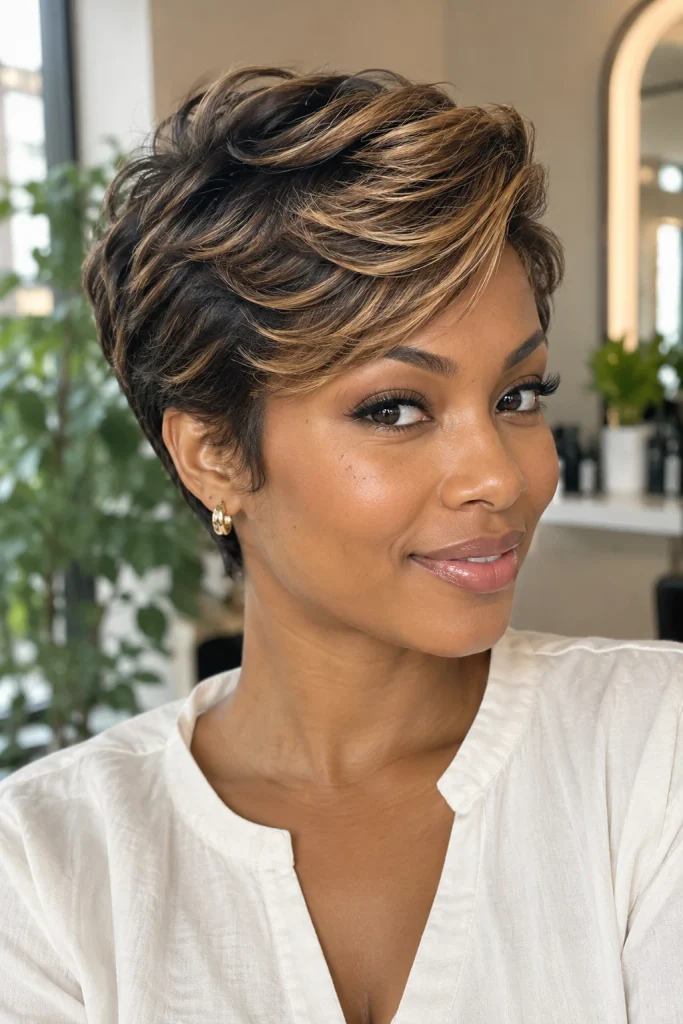
Balayage adds dimension without a harsh root line, so it grows out gracefully. On a pixie it gives a sun-kissed finish that works with natural texture. It is a great fit if you want color but dislike frequent salon visits.
Best face shape and hair texture: oval, square and heart faces; straight or wavy brown hair.
Add a little texture cream so the highlights show through the layers, and use sulfate-free shampoo to keep the color soft. Because the shade blends so gently, it needs very little daily styling.
Ask for fine, hand-painted highlights near the top and around the face, not thick stripes, and agree on a touch-up plan every three to four months. Show your stylist photos of the exact brightness you like.
23. Silver or Gray Feminine Pixie
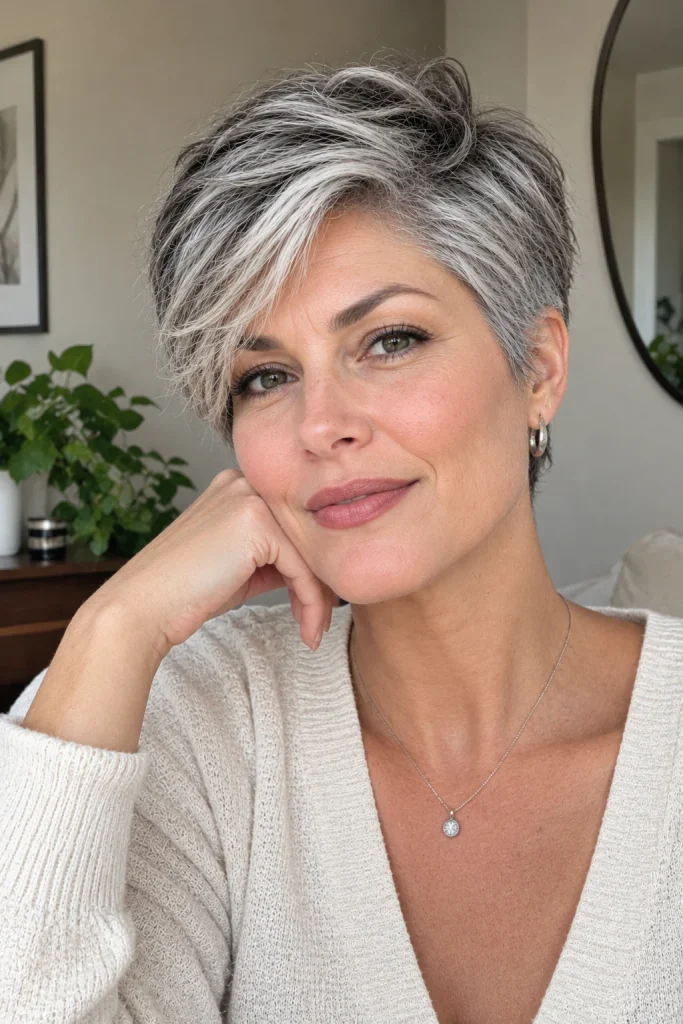
A silver pixie looks elegant when the cut complements your natural texture. The shorter length gives the stylist room to shape the crown and neckline, and feathered layers keep the outline soft. Gray hair is often coarser or drier than before, so a well-shaped cut makes it look intentional and polished.
Best face shape and hair texture: oval, heart and long faces; fine to medium hair in any gray texture.
Use a hydrating conditioner and a light cream. Purple shampoo helps with yellow tones, but it is not needed by everyone, so use it sparingly. A weekly mask keeps silver hair shiny.
Ask for a shape that works with your gray texture and how it will grow out between trims. Mention whether your gray is wiry or fine, because that changes how much layering the cut can handle.
24. Low-Maintenance Feminine Pixie
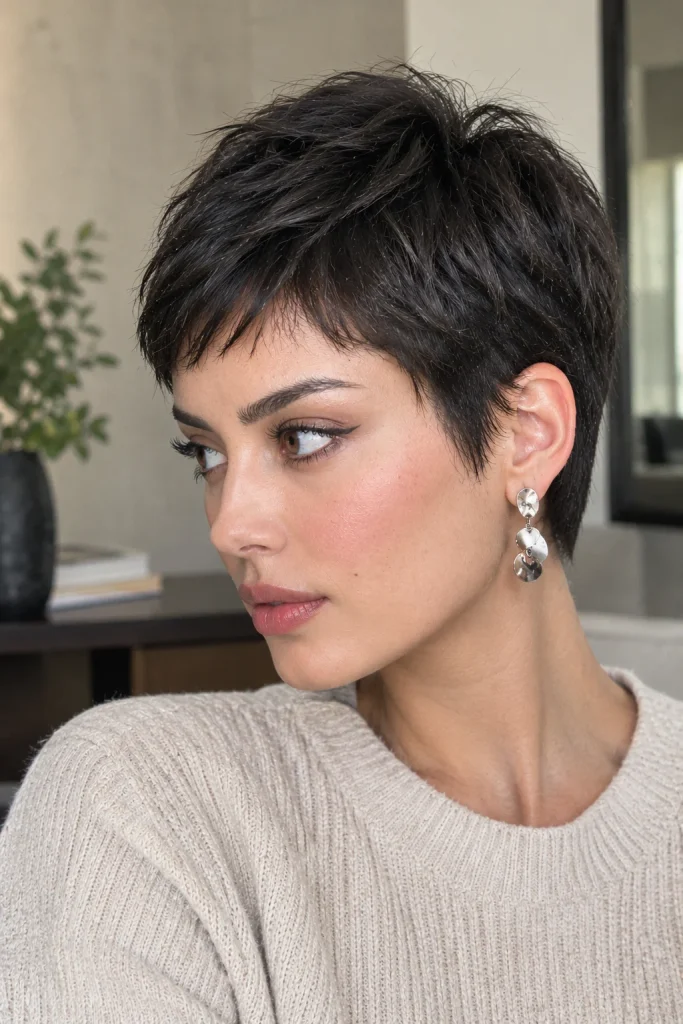
A low-maintenance pixie is less about a trendy shape and more about fitting your real routine. It follows your natural texture, falls into place without much styling and stays comfortable as it grows. That might be a longer pixie with a side fringe, or a softly textured crop you arrange with your fingers.
Best face shape and hair texture: oval, round and square faces; any texture, especially hair that dries well on its own.
Use a small amount of product, arrange the fringe with your fingers and let the rest follow its direction. Air-dry whenever possible. Low maintenance still means regular trims, so book the next one before you leave the salon.
Tell your stylist how much time you want to spend on your hair each morning, and ask for a shape that needs no complicated routine. Ask which parts will need the most upkeep, usually the nape and the fringe.
Which Feminine Pixie Cut Is Best for Your Face Shape?
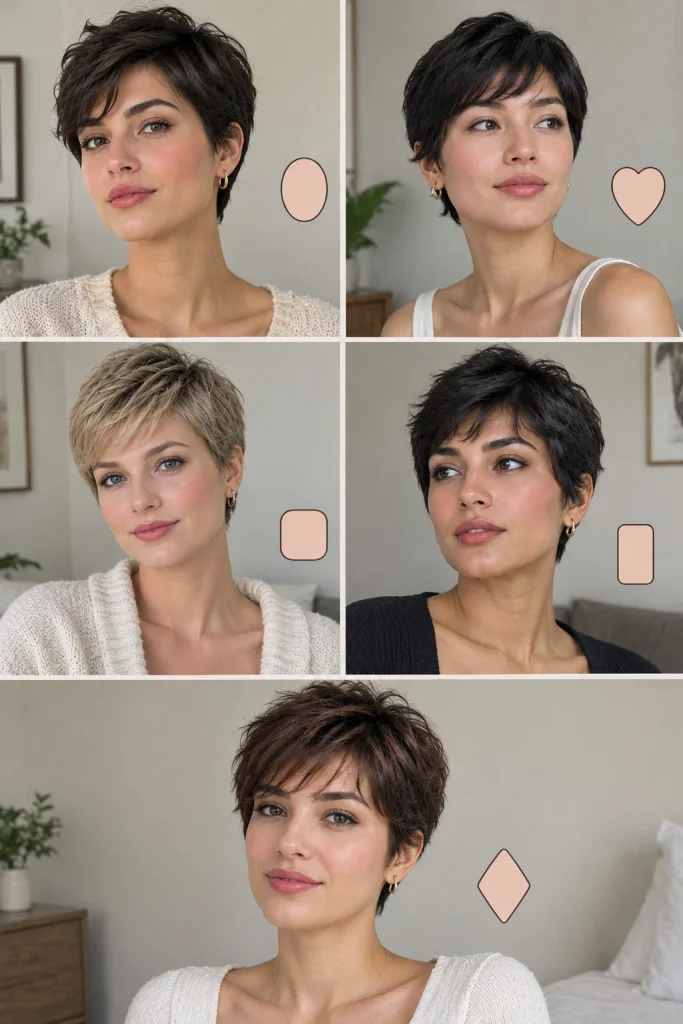
Face shape is a useful starting point when choosing short hair styles for women, but it should not decide alone. Texture, density, growth patterns and personal taste matter just as much.
| Face shape | What tends to work | Worth discussing with your stylist |
| Round | Crown lift, long side-swept fringe, soft pixie bob | Avoid heavy volume at the sides |
| Oval | Almost anything: classic crops, textured layers, curls, long fringe | Choose by texture and finish, not rules |
| Square | Soft layers, wispy bangs, fringe with movement | How the cut sits around temples and jawline |
| Heart | Long side-swept bangs, pixie bob, soft fringe | Balance between crown, fringe and lower sides |
| Long | Fuller fringe, balanced volume, some width at the sides | Avoid extra height on top |
The goal is not to hide your face shape. It is to find a silhouette you enjoy wearing. Compare photos from the front and side before deciding.
24 Sweater Nails: Cozy Winter Nail Art Ideas to Try This Season
How to Choose a Pixie Cut for Your Hair Type
The same haircut can look very different on straight, wavy, curly, fine or thick hair. Before choosing a reference photo, think about how much your hair bends, how densely it grows and how it behaves when air-dried.
- Straight hair: sleek pixies, side-swept styles and feathered layers work well. If your hair is fine, keep enough density at the ends.
- Wavy hair: a shaggy or longer textured cut lets natural movement show. Ask how it will sit without a blow-dry.
- Curly hair: pick a stylist who knows your curl pattern, since shrinkage changes the final shape.
- Thick hair: strategic shaping removes bulk and keeps the outline balanced. Point out where it puffs out.
- Fine hair: a careful outline and restrained layering look fuller. Heavy products and heavy texturizing work against you.
- Gray or silver hair: consider texture and condition, not only color. Gentle conditioning keeps it polished.
Short Hair Styles Easy to Do at Home: How to Style a Feminine Pixie
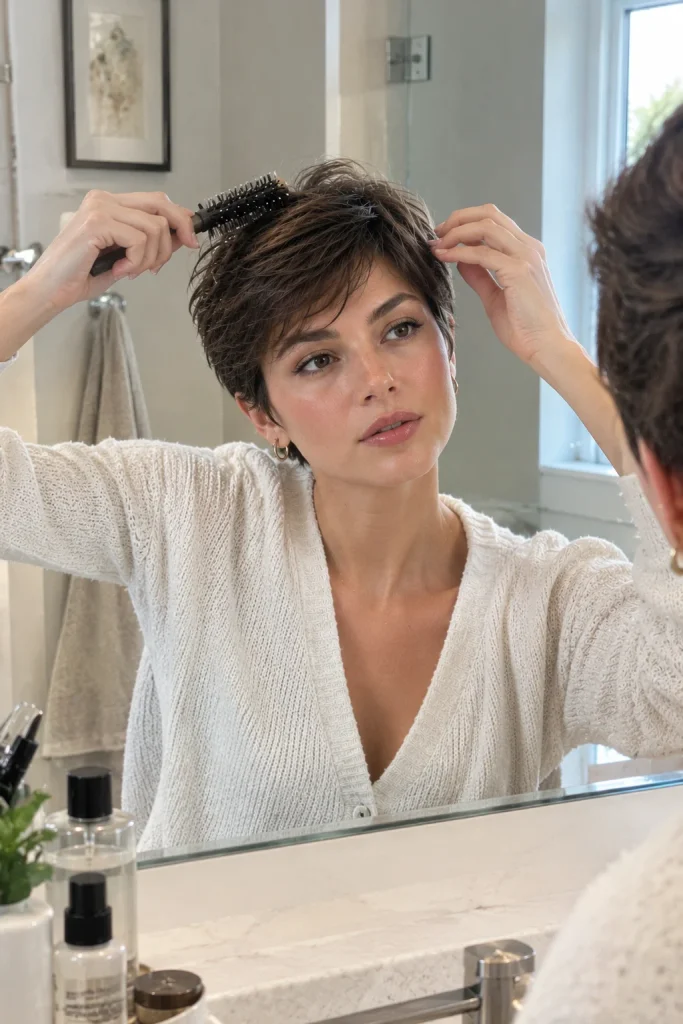
A pixie is quick to style once you know how your hair falls. You do not need every product or tool. A simple routine you can repeat beats a complicated one you will skip.
- Use the right amount of product. Apply a small amount to damp hair: lightweight mousse for fine hair, a curl or wave cream for natural patterns. Start with less than you think you need.
- Shape the fringe and crown. Guide the fringe with your fingers or a small brush and arrange the top layers. Work with a strong natural part instead of fighting it.
- Choose your drying method. Straight hair likes gentle blow-drying, while waves and curls often need less manipulation. Use heat protectant with any hot tool.
- Finish without stiffness. A little cream or flexible paste on the ends is enough. Leaving natural movement makes short hair look softer.
- Change the look in small ways. A side part, a lifted crown or a fringe pushed back makes the same cut feel new.
What to Tell Your Hairstylist Before Getting a Pixie
A reference photo helps, but explaining what you like about it makes the consultation far more productive. Two women can bring the same photo and need different cuts because their hair is different. Think about these questions before your appointment:
- Do you want the sides closely cropped or softly blended?
- Would you like a short fringe, wispy bangs or longer side-swept pieces?
- Do you want volume at the crown or a flatter, sleeker shape?
- How much time will you spend styling each morning?
- Do you prefer a neat finish or a tousled one?
- How often are you comfortable returning for a trim?
Also ask how the cut will look as it grows. If you are unsure about going very short, a long pixie or pixie bob gives you flexibility while you get used to the change. A good consultation shows you what is realistic for your hair, instead of promising that every reference photo will look the same on you.
How to Maintain a Short Haircut as It Grows
Short hair is quick to wash and style, but small changes in length affect the silhouette. The neckline, fringe and ears grow at different rates, so a neat cut slowly changes shape.
- Plan trims around your haircut. Closely cropped pixies show regrowth sooner than longer ones. Ask your stylist how often your specific cut needs reshaping, and mention it if you plan to grow it out.
- Match products to your hair. Lightweight products for fine hair, richer conditioning for curls, and color-safe care for bleached or colored hair. Buy only what solves a real problem.
- Protect your hair from heat. Use heat protectant, keep temperatures suitable for your hair and avoid passing a hot tool repeatedly over one section.
- Expect the shape to change. The fringe becomes easier to sweep, the sides start to cover the ears and the neckline needs reshaping. Regular consultations make growing out far easier than starting over.
Find a Feminine Pixie Cut That Feels Like You
The best pixie is the one that suits your hair and fits your routine. Save your favorite ideas, bring them to your stylist, and choose a shape you’ll enjoy wearing.
Related reading: short bob haircuts, curtain bangs ideas, haircuts for round faces, hairstyles for women over 50.
Leave a Comment